




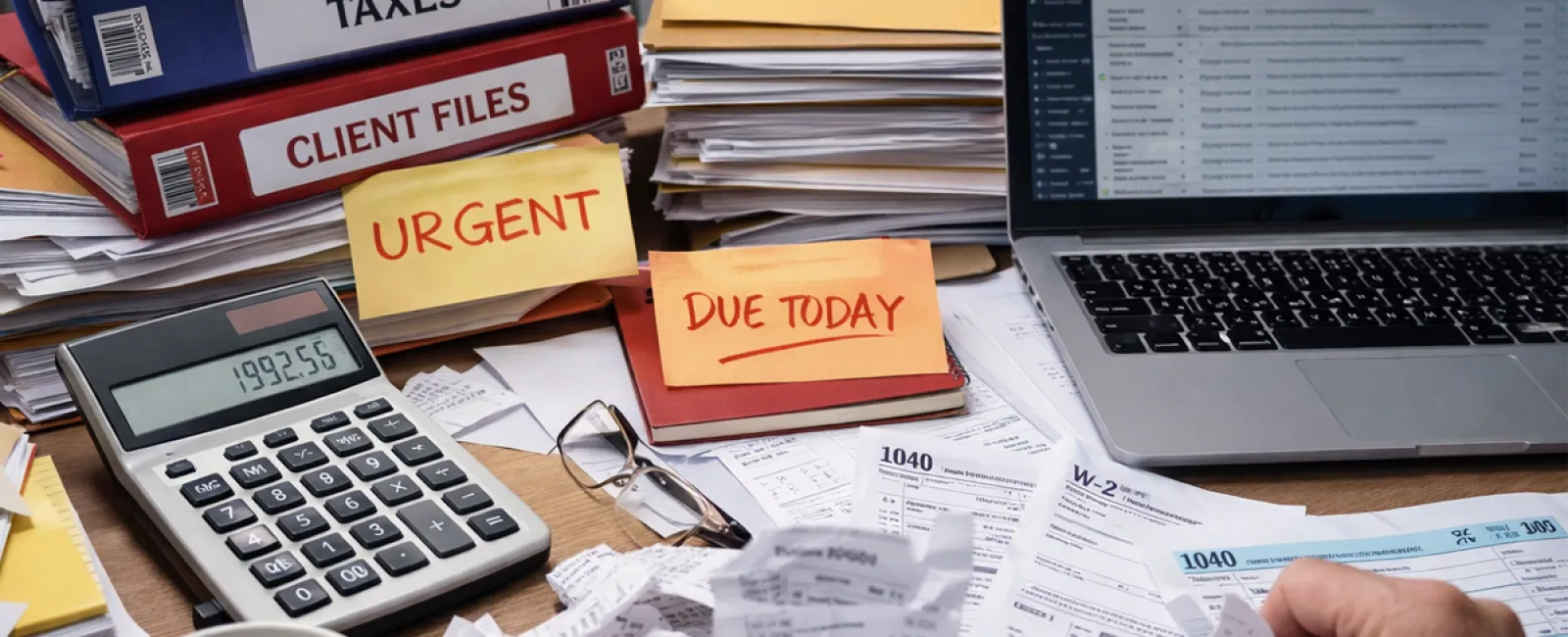
It's March, the heart of tax season.
Your accountant is overwhelmed, your bookkeeper is rushing, deadlines are closing in, and your inbox is overloaded.
Everyone is focused on just making it through the month.
This chaos isn't new to you.
But the hackers are well aware of it too.
Security experts observe a dramatic rise in phishing attacks during tax season, with March seeing nearly a 28% surge in tax-related scam emails compared to calmer months. These deceptive emails are crafted to blend seamlessly into typical business communications, striking at the moment everyone is busiest.
This isn't by accident.
It's strategic timing.
Here's what to expect and four straightforward ways to protect your business from becoming an easy mark.
Supply Chain Stress Creates Vulnerability
What many overlook is that:
Hackers don't solely target accounting firms.
They exploit the chaos surrounding tax season.
During tax season:
- Clients scramble to submit sensitive documents
- Staff skip routine security checks to manage volume
- Requests like "Just send me the file" override usual caution
- Verification steps get bypassed due to heavy workloads
The entire process accelerates.
And haste is where errors occur.
Hackers don't attack calm, steady businesses.
They target those buried in work.
March is that intense time.
Recognizing These Attacks
This isn't fiction.
Phishing emails mimic everyday messages in your inbox.
- An email "from your accountant" asking to resend W-2s due to missing info
- A vendor claiming their bank details have changed and requesting updates
- A DocuSign prompt asking for immediate signature on tax documents
- An urgent appeal "from your CEO" traveling and needing instant help
None of these raise alarms.
They feel like routine March business.
That's why these scams succeed.
Why Even Busy Professionals Fall Victim
This isn't carelessness.
This is human nature.
Faced with overflowing inboxes and looming deadlines, people often skim instead of read thoroughly. They make assumptions and act quickly.
Scammers exploit this.
Their emails are tailored for distracted recipients, counting on one unnoticed detail.
You don't need to be reckless; just busy.
And in March, almost everyone is.
Four Key Habits to Avoid Being an Easy Target
The best news? You don't need complex cybersecurity tools or a full IT team to lower your risk.
Implementing a few deliberate habits during the busiest months can make all the difference.
1. Confirm payment changes by phone
If you receive an email about altered vendor banking info, don't reply.
Instead, call a trusted number to verify the change.
This simple step can block some of the costliest scams.
2. Take your time with sensitive requests
Urgency should prompt caution, not rush.
If asked for W-2s, tax papers, or financial files "immediately," pause and verify.
Authentic senders will wait; scammers won't.
3. Double-check urgent demands through another channel
If an email stresses urgency, confirm by phone, text, or internal message.
A quick second check can stop a costly mistake.
True emergencies can withstand verification; fake ones cannot.
4. Alert your team about scam risks
This week, remind your team that tax season boosts scam attempts.
Encourage them to slow down, verify, and ask questions when things seem unusual.
This small mindset shift can save headaches later.
Bottom Line
Tax season is stressful enough without falling victim to scams.
These attacks aren't sophisticated, just perfectly timed.
They depend on hurried people making assumptions and pushing through March.
You don't need to overhaul systems to stay safe.
Slowing down when it counts and verifying urgent requests usually does the trick.
Free Busy-Season Review
Your business might already have strong security habits in place, and that's excellent.
If tax season pushes your team into a reactive rush or you're unsure how urgent requests are handled under pressure, consider a quick free Consult review.
No scare tactics or obligation. Just a straightforward evaluation to help prevent major headaches this tax season.
If this isn't a fit for you, feel free to share it with someone who can benefit.
Click here or give us a call at 630-895-8208 to schedule your free Consult.